

About
Critical engagement with global politics, political theory, and contemporary issues through a principled Islamic lens.
Our Aim
The Islamic Institute of Current Affairs (IICA) is a research platform dedicated to addressing what we describe as a growing crisis of intellectual poverty within contemporary Muslim discourse.
Our work seeks to reconnect the intellectual heritage of the Islamic tradition with modern political, economic, and social questions.
While rooted in classical scholarship, our analysis engages directly with contemporary debates in politics, law, economics, and global affairs.
IICA is particularly tailored to the Western Muslim diaspora, offering perspectives that speak to the realities and challenges faced by Muslims living in Western societies.
Founded and led by university students and graduates in the social sciences, the institute aims to cultivate a new generation of Muslim thinkers capable of critically engaging with global developments.
Why IICA Exists
We are living through a period of intellectual poverty in which meaningful engagement with contemporary issues through an Islamic intellectual framework has become increasingly rare.
Three factors contribute to this crisis:

Ideology:
A weakening appreciation for the role of knowledge in shaping action and public life.

Methodology
Classical scholarship is often taught without tools for engaging modern political, economic, and social realities.

Outreach
While scholarship continues to be produced, there are limited platforms capable of translating that knowledge into wider public discourse.
Our Approach
The Islamic Institute of Current Affairs seeks to bridge the gap between Islamic intellectual tradition and contemporary academic discourse.
Rather than rejecting modern disciplines, we believe they must be critically engaged with and reshaped through principled Islamic frameworks.
By combining classical scholarship with rigorous analysis of contemporary affairs, IICA aims to cultivate thinkers capable of understanding and addressing the challenges facing the Muslim world and the global order.
What We Do
Research & Analysis
In-depth articles examining global politics, economics, law, and contemporary issues affecting the Muslim world.
Online Courses
Educational programmes connecting classical Islamic scholarship with modern intellectual challenges.
Events & Discussions
Lectures, seminars, and public conversations addressing pressing global issues.
Strategic Insight
Historical analysis and forward-looking perspectives aimed at understanding global developments.
Who IICA Is For
IICA is a platform for students, graduates, scholars, and professionals seeking serious engagement with contemporary issues through an Islamic intellectual lens.
Whether studying politics, law, economics, Islamic studies, or the social sciences, IICA provides a space where research and ideas can contribute to wider public discourse.
Join Us
Become part of a growing network of students, researchers, and professionals engaging seriously with contemporary affairs through an Islamic intellectual framework.
Explore our work by pressing the buttons below, browsing the sections further down the page, or using the menu bar above.
We look forward to welcoming you to our community!
Sincerely,
Mohammed Umar Aziz (BSc Economics and Politics)
Umar Majeed (LLB Law)
IICA Co-Founders

Join 300+ readers engaging with serious analysis!





Islamic Institute of Current Affairs
Pioneers Programme Cohort 2 | Applications Now Open

Pioneers Programme Cohort 2 | Applications Now Open

Can Your Career Really Give You Fulfilment? | Islam & Modern Work | Shaykh Abdal Hakim Murad
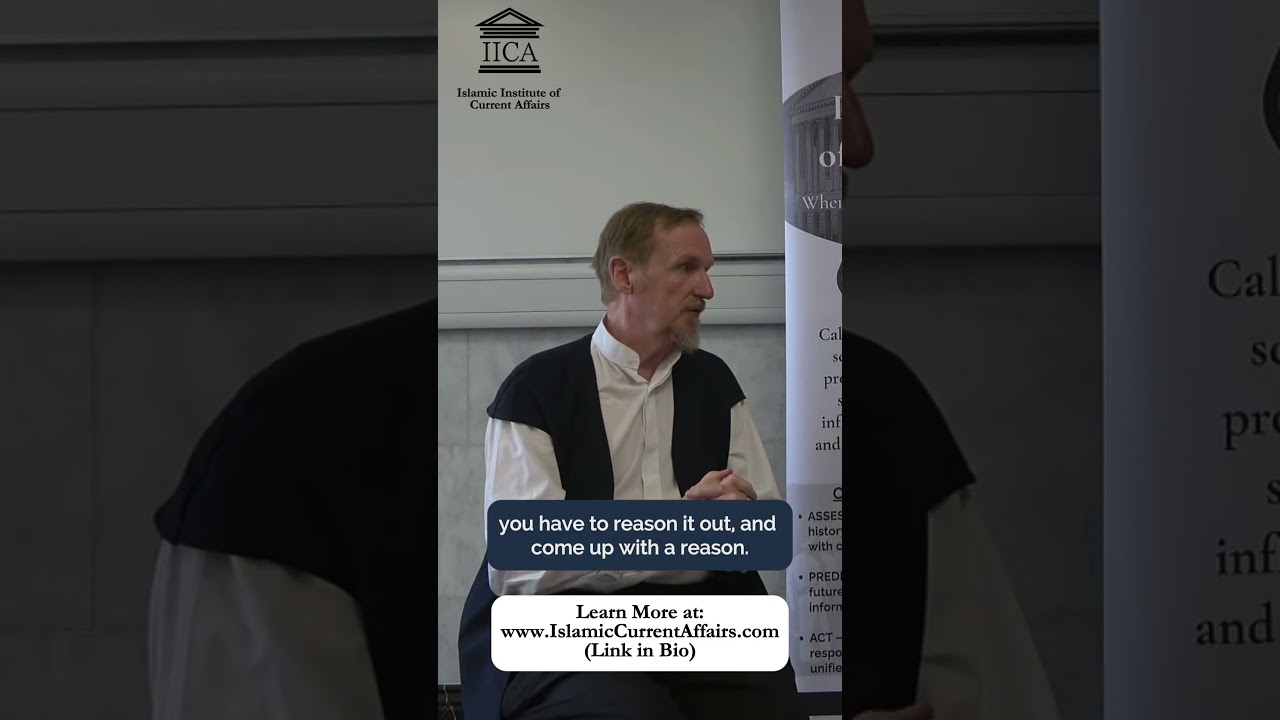
Shaykh Abdal Hakim Murad | Why “Islam Says So” Isn’t Enough | Effective Daʿwah

What Is Genocide? The Legal Definition Explained - IICA Palestine Activism Seminar
Explore IICA
Access all our platforms, courses, events, and resources in one place.
OR
SCAN

Contribute to IICA!
Submit an Article Proposal
Are you researching contemporary issues or developing new perspectives through an Islamic intellectual lens?
The Islamic Institute of Current Affairs (IICA) welcomes article proposals from students, graduates, and researchers engaging with contemporary affairs through a principled Islamic lens.
We invite submissions across our Policy Areas, including Foreign Policy, Economics, Domestic Policy, History, Ethics, and Legal Systems.
Share your research, present your analysis, and contribute to informed discussion.
Explore our existing articles here.
Support the Voice of Informed Muslims – Donate Today!
Help us challenge intellectual poverty, amplify critical perspectives, and build a future led by empowered Muslim thinkers.


